
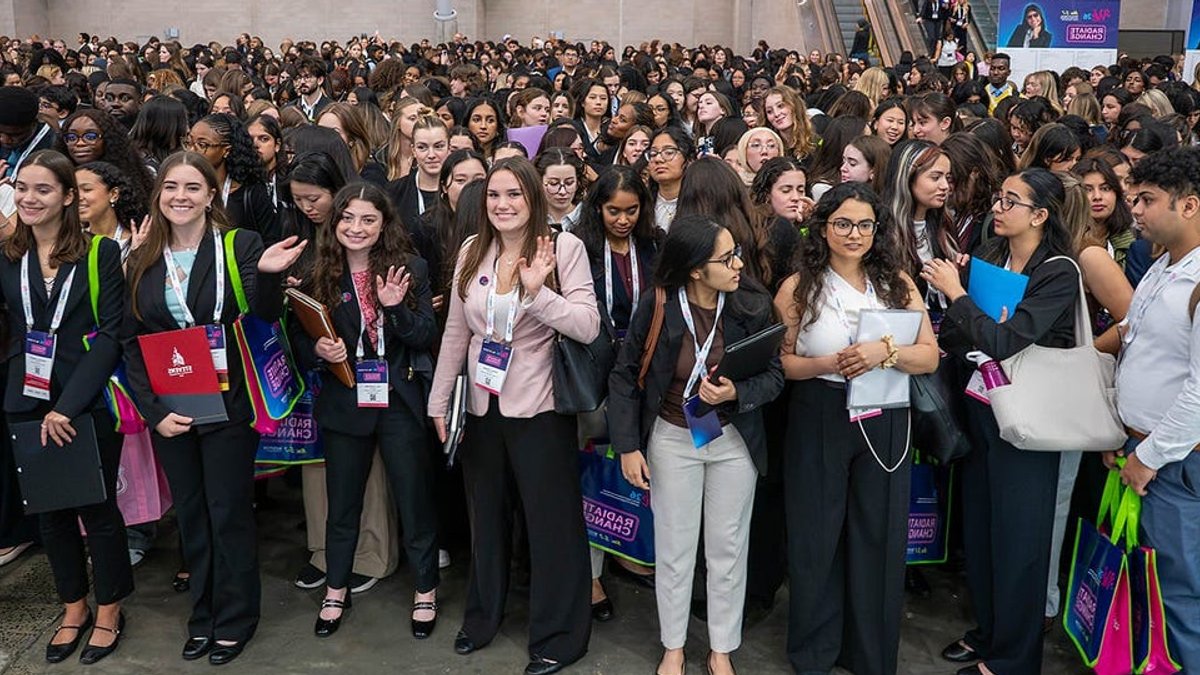
Students at engineering conferences are now lining up hours before career fairs begin, competing for limited face time with recruiters in a job market where entry-level opportunities have shrunk. At the Society of Women Engineers’ conference in Boston, 14,000 attendees—about 40% of them college students—packed the venue over three days, with some arriving as early as 5 a.m. to secure a spot near hiring booths.
Isabella Wong, a 20-year-old biochemistry student at Simmons University, skipped the worst of the rush but still found herself shoulder-to-shoulder with peers fighting for attention. “I think it’s very indicative of people being determined to get their foot in the door,” she said. The competition reflects a broader trend: 42.5% of recent graduates are underemployed, according to the Federal Reserve. For many, career fairs remain one of the few ways to avoid becoming a faceless résumé in an overcrowded job market.
Read Also: Nvidia CEO falls out of top 10 richest
Jennifer Scott, the Society of Women Engineers’ chief growth officer, has seen this desperation before. While the conference once drew over 20,000 attendees, a number she called “too many”, she noted a shift in recent years. Fewer companies are hiring early-career candidates, and some have stopped visiting college campuses entirely. The Grace Hopper Celebration, another major women-focused engineering conference, was canceled this year.
Isabel Amaya, a 21-year-old informatics student at the University of Washington, had a return offer from her current employer, but she attended the Society of Hispanic Professional Engineers conference primarily for networking. She witnessed firsthand how the job market has changed. Some friends had abandoned their search for entry-level roles, switching industries or settling for internships. Others delayed graduation to remain eligible for internship programs.
Wong observed a similar pattern at the SWE conference. Most students she spoke to were targeting internships, not full-time jobs, because entry-level positions now demand more experience than recent graduates typically have. “The current job market is looking for more experience than what we have as college students,” she said.
Read Also: CEO shares how hiring culture over skills builds stronger teams
Recruiters at these events often work with pre-screened candidates, conducting interviews in private booths. Jocelyne Suerte, a 21-year-old mechanical engineering student at the University of Houston, strategically targets companies that interview on-site. At the SHPE conference, attendees lined up at 4:30 a.m. to rush the booths, while at SWE, poor WiFi forced her to learn the venue layout by memory. Her efforts paid off: she secured offers from both conferences and is now deciding which to accept.
Not everyone had the same luck. Allan Morales, a sophomore chemical engineering student at the University of Michigan, found that most recruiters were only interested in juniors. He watched as a peer, who already had competing offers, landed a job at Micron, a major tech employer. “He was stacked,” Morales said, highlighting how prior experience or multiple opportunities can make a critical difference in a crowded field.


Leave a Reply