
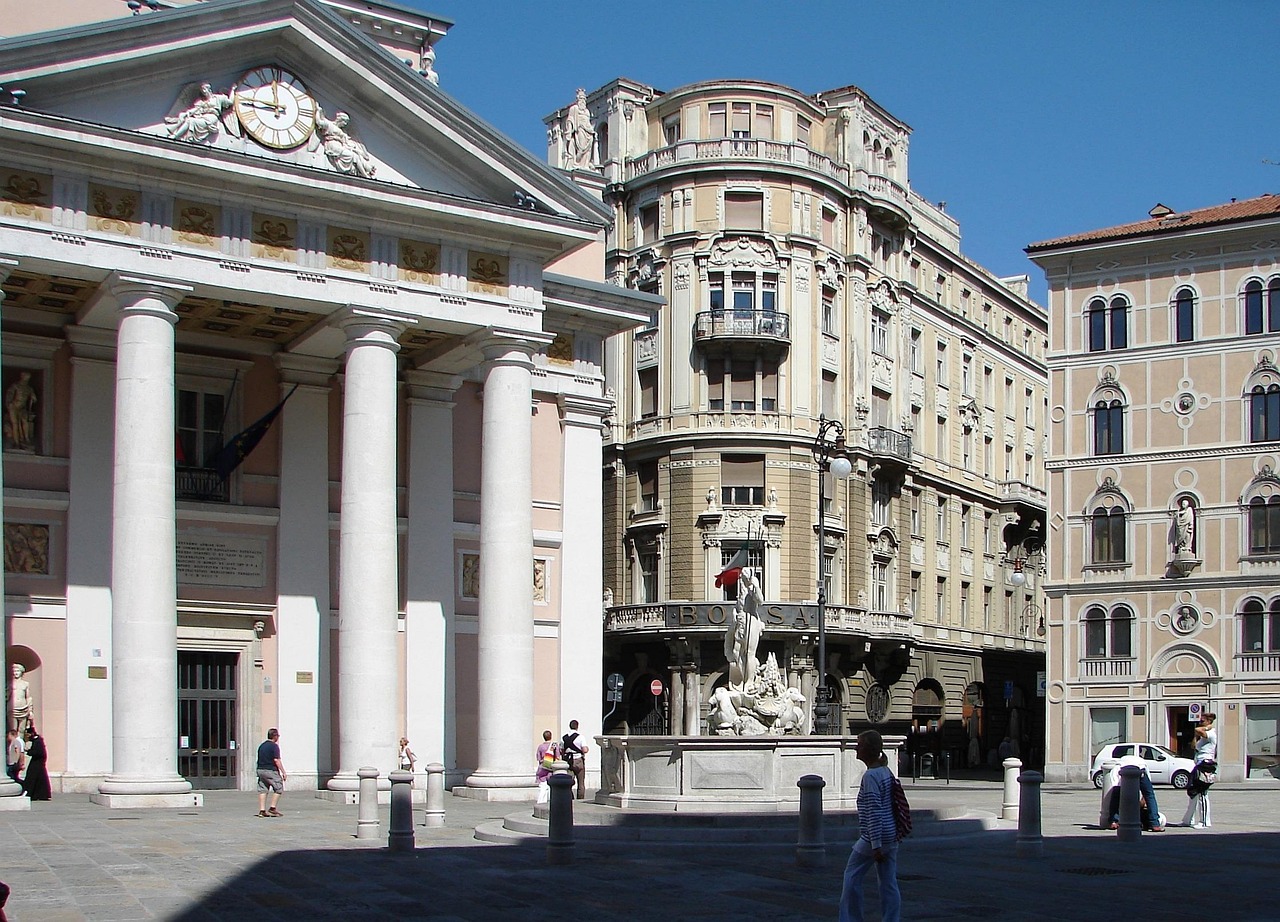
Trieste’s Palazzo Berlam houses one of Europe’s most significant corporate archives, covering nearly two centuries of economic and social history. The building, completed in 1926-1928, holds the Generali Group’s historical records alongside its international training academy. This combination shows the company’s approach to history as a practical resource.
The archive as a living record
The Generali Historical Archive collects images, documents, and objects that trace the company’s development from its founding to the present. The collection serves multiple purposes: training employees, educating students, and supporting researchers. Its dual role as both repository and classroom demonstrates how the company treats its past as an active tool.
The 1831 founding act reveals Generali’s early ambition. Based in Trieste’s free port, the company didn’t focus solely on maritime insurance, the obvious choice for a port city. Instead, it offered life policies, hail coverage, and fire protection—a broad approach that inspired its name. Initial funding came from a diverse group of investors, including Greek, Jewish, Catholic, and Protestant backers, reflecting the city’s cosmopolitan character.
Related: Audi V6 Heritage Lives On in New RS 5
The archive also preserves the first share certificate, though its more unusual items reveal unexpected stories. A vending machine from the early 1900s, installed in Italian train stations, dispensed travel insurance policies for a coin—an early form of on-demand coverage. Fire plaques, metal signs once attached to insured buildings, marked properties protected by Generali’s private firefighting teams. These examples show how private innovation often preceded public solutions. These campaigns made insurance a familiar concept in European households by integrating the company into daily life.
A window into Europe’s economic history
The archive’s detail extends to broader trends. In the late 19th century, Generali agents worked with early meteorological centers to map weather patterns across Italy, creating statistical tables that now help historians track agricultural changes.
Generali doesn’t view the archive as just a historical collection. It serves as proof that corporate longevity depends on adaptability. The company’s early focus on data collection, for example, mirrors today’s emphasis on predictive analytics. Advertising materials—from 1850s posters to illustrated calendars of the early 1900s—reveal how Generali built its brand by integrating itself into daily life.
Related: VPS vs Shared Hosting: Which Is Right For You?
This method influences how companies consider heritage. Many treat archives as static displays, but Generali uses its collection to strengthen identity. Employees study the company’s history to understand its values—sustainability, innovation, and customer focus—while researchers use the materials to examine broader economic trends. The archive’s openness, with visits encouraged for schools and scholars, suggests corporate history can benefit the public, not just the company.
The location in Trieste reflects Generali’s own path. The city’s history as a crossroads—once part of the Austro-Hungarian Empire, later Italian—parallels the company’s expansion. Founded in a free port, Generali grew across Europe while keeping its Italian roots. Today, it operates in over 50 countries, yet its headquarters remain in Trieste, showing that global reach doesn’t require abandoning origins.
One striking feature is the visual collection. Posters and calendars from the late 1800s and early 1900s illustrate how Generali marketed itself before mass media. Artists like Achille Beltrame and Gino Boccasile created images that turned abstract policies into clear promises—protection from hail, fire, or financial hardship. These designs went beyond advertising; they were early examples of corporate storytelling, blending art with commerce.
The archive remains active. Archivists regularly find new connections, such as how 19th-century weather data can inform modern climate risk models. The collection grows not just through new items but through reinterpretation, finding current relevance in old documents. This approach keeps the archive useful in the present, not just a historical record.
For a company that has survived wars, economic crises, and technological shifts, the archive offers a clear lesson. Resilience comes from using the past to handle change. The items in Palazzo Berlam don’t just document Generali’s history—they explain its continued existence.


Leave a Reply