
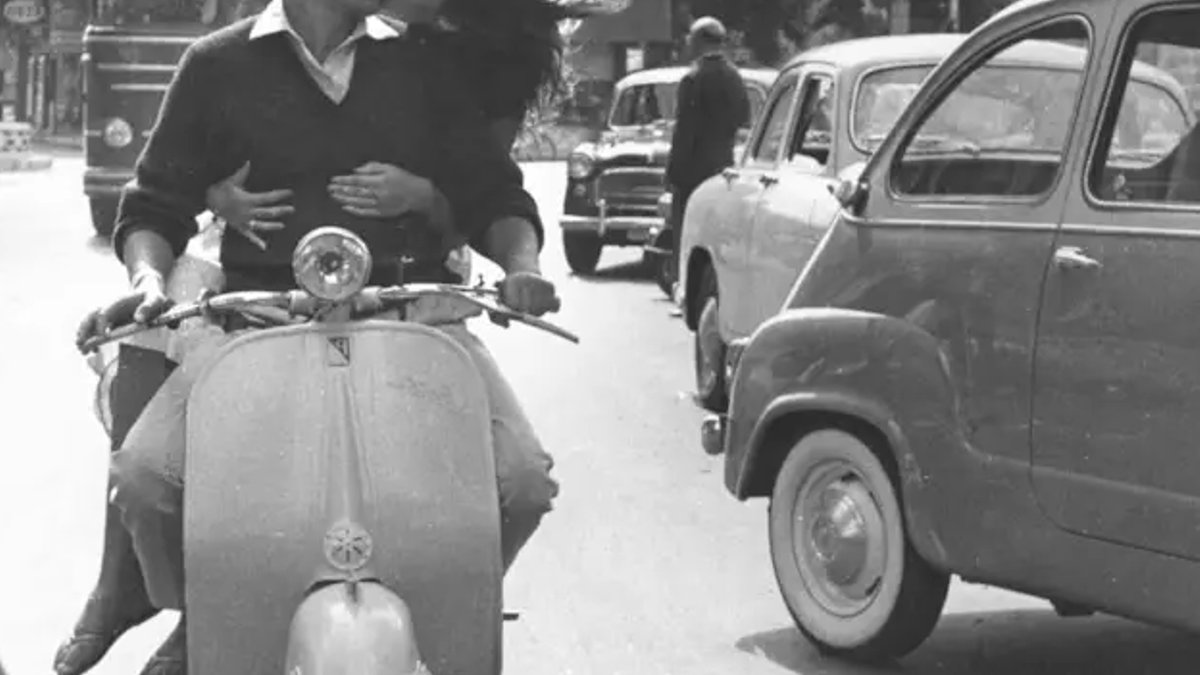
The Vespa scooter, now a global icon, began as a practical solution born from Italy’s post-war recovery. Its origins trace back to Piaggio’s aeronautical expertise, but the first production models relied on a critical partnership with Alfa Romeo. The design, patented in 1946, described a “motorcycle with a rational complex of organs and elements with a combined frame and hood covering the entire mechanical part,” a radical departure from traditional two-wheelers of the time.
From wartime factories to the streets of Rome
The first 60 Vespas, known as the “Series Zero,” were hand-built by metalworkers before mass production could begin. Delays in securing presses for the steel body forced Piaggio to outsource early production. An agreement with Alfa Romeo in April 1946 allowed the scooter to enter full-scale manufacturing, though material shortages limited the first year’s output to 2,484 units—far below the planned 5,000.
Of those, 137 were 125cc models exported to Switzerland, where tax laws made them more affordable than in Italy. The domestic market didn’t receive the 125cc version until 1948. The scooter debuted at the Turin Mechanical and Metallurgy Show in March 1946, followed by a public test drive at Rome’s Golf dell’Acquasanta days later.
Related: Finding the Next Market Winners
Enrico Piaggio saw the scooter as a global product from the start. By 1946, it was already being shipped to the U.S. and South America.
A cultural phenomenon beyond transportation
The Vespa’s influence went beyond engineering. It became a symbol of Italian style, appearing in films like Roman Holiday (1953), where Audrey Hepburn and Gregory Peck’s ride through Rome made it part of pop culture. Museums from New York’s MoMA to Milan’s Triennale later displayed Vespas as examples of industrial design, recognizing their balance of form and function.
This dual role as both a practical vehicle and a cultural artifact explains its longevity. The scooter represented freedom, youth, and Italian flair. Its adaptable design allowed it to evolve with changing tastes.
Related: Ryanair passenger nearly sucked out after engine failure
Online interest reflects the scooter’s enduring popularity. Over the past year, the term “Vespa” generated nearly 13 million searches on Italy’s leading used-vehicle platform, Subito.it, topping all categories. That digital presence matches its physical one, from Rome’s streets to museum displays.
The Vespa demonstrates how mobility paired with elegance can outlast its original purpose.
Its legacy also mirrors broader shifts in social capital, where long-standing brands shape cultural identity. Generali’s influence in Italy offers another example of how institutions build trust across generations.


Leave a Reply