
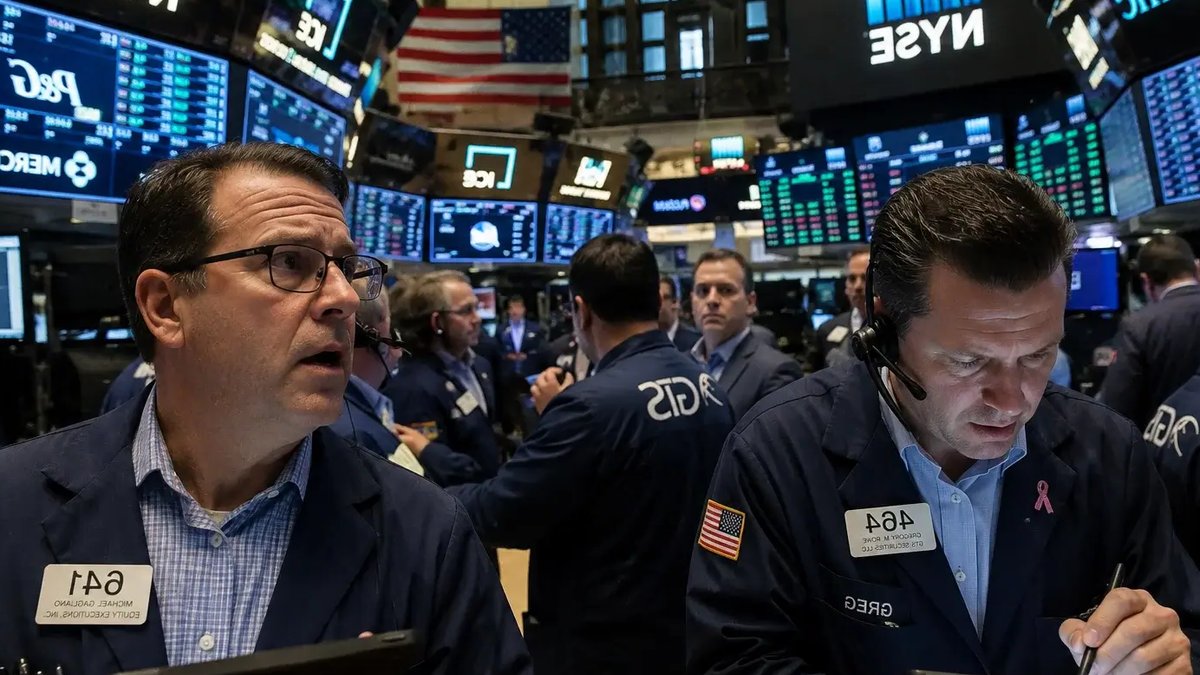
The Dow Jones Industrial Average climbed 212 points Tuesday, reversing most of Monday’s losses as strong quarterly earnings from 3M and General Motors fueled a broader market rebound. The S&P 500 rose 0.6%, while the Nasdaq Composite jumped 0.9% to 25,689.19, led by a revival in semiconductor stocks.
Earnings beats drive the rally
3M surged 6.3% after reporting adjusted earnings of $2.40 per share—$0.15 above expectations—and raising its full-year guidance to $8.80–$8.95. Revenue grew 5.6% year over year to $6.5 billion, with its safety and industrial segment posting an 8% organic increase.
General Motors followed with its own strong performance, posting adjusted earnings of $3.57 per share—nearly 12% above consensus—on $48 billion in revenue. Adjusted EBIT jumped 29.8% to $3.9 billion. Shares rose 3% as investors responded to margin expansion, particularly in North American trucks and SUVs.
Related: Oil Falls to $82.35 Amid Rising Glut and War Premium
Not every earnings report was rewarded. Halliburton topped estimates with $0.55 per share in adjusted earnings and $5.71 billion in revenue but saw its stock drop 3.6%. The narrow beat, lack of forward guidance, and broader energy sector concerns—amid rising crude prices and Middle East tensions—overshadowed the results.
Chips rebound as rotation flips
The semiconductor sector staged a sharp recovery, reversing a mid-July slump that had seen money shift into megacap software stocks. South Korea’s KOSPI surged 3.56% overnight, led by chipmakers, and the momentum carried into U.S. markets. The Nasdaq-100 futures contract was up 1.3% before the opening bell, signaling a broad shift back into the sector.
The shift defines the current phase of the AI trade. After weeks of chipmakers underperforming while software giants like Microsoft and Alphabet advanced, the market is now betting that the capex cycle behind AI infrastructure can sustain valuations. Tuesday’s rally showed the sector can rebound quickly when news aligns with expectations.
Similar patterns have played out multiple times this year, with the market oscillating between hardware and software in search of the next catalyst. This rebound arrives as megacap earnings begin, starting with Alphabet on Wednesday. The results will test whether the AI spending narrative holds or fractures under scrutiny.
Geopolitical risks linger but don’t derail gains
Two major threats hung over the session: new U.S. tariffs on Canadian goods and escalating Middle East tensions. The market reacted cautiously but not with panic.
The tariff move adds uncertainty to an already complex macro picture. Canada is the U.S.’s largest trading partner, and retaliatory measures could disrupt supply chains in autos, agriculture, and materials.
Meanwhile, the Middle East conflict intensified. U.S. forces conducted a ninth consecutive day of strikes against Iranian targets, and Yemen’s Houthis announced a naval blockade on Saudi Arabia, threatening global energy supplies. Crude prices fluctuated, with WTI touching $90 a barrel before settling near $81—still high but below the $112 peak seen during earlier Iran-related spikes.
The oil market’s reaction reflects a delicate balance. U.S. crude inventories sit at 43 days of supply, the lowest in 45 years, leaving little room for disruption. Yet demand concerns persist if prices climb further. Halliburton’s post-earnings selloff highlighted this tension: investors sold despite solid fundamentals, fearing broader conflict could hurt activity.
Related: Venezia hotel combines art and luxury
Diplomatic signals offered some hope. An Iranian Foreign Ministry spokesman suggested negotiations could resume based on national interests, and equities improved mid-morning as investors bet on a potential off-ramp within the month. The war remains the market’s biggest tail risk, but for now, equities are pricing in resolution over escalation.
Earnings season off to a strong start
The broader earnings picture provided the clearest bullish signal. Of the 66 S&P 500 companies that have reported so far, 88% have beaten earnings estimates—a rate well above historical norms. The strong start suggests corporate America entered the quarter with conservative guidance and is now clearing it comfortably, a trend that often leads to upward revisions as the season progresses.
The Dow closed up 0.2% at 52,051.22, while the S&P 500 ended 0.6% higher at 7,487.12. The Nasdaq’s 0.9% gain left it just shy of its intraday high, with the chip rebound providing leadership. The VIX fell 6.17% to 17.50, signaling a market pricing in calm—at least until the next earnings report or geopolitical headline.


Leave a Reply