
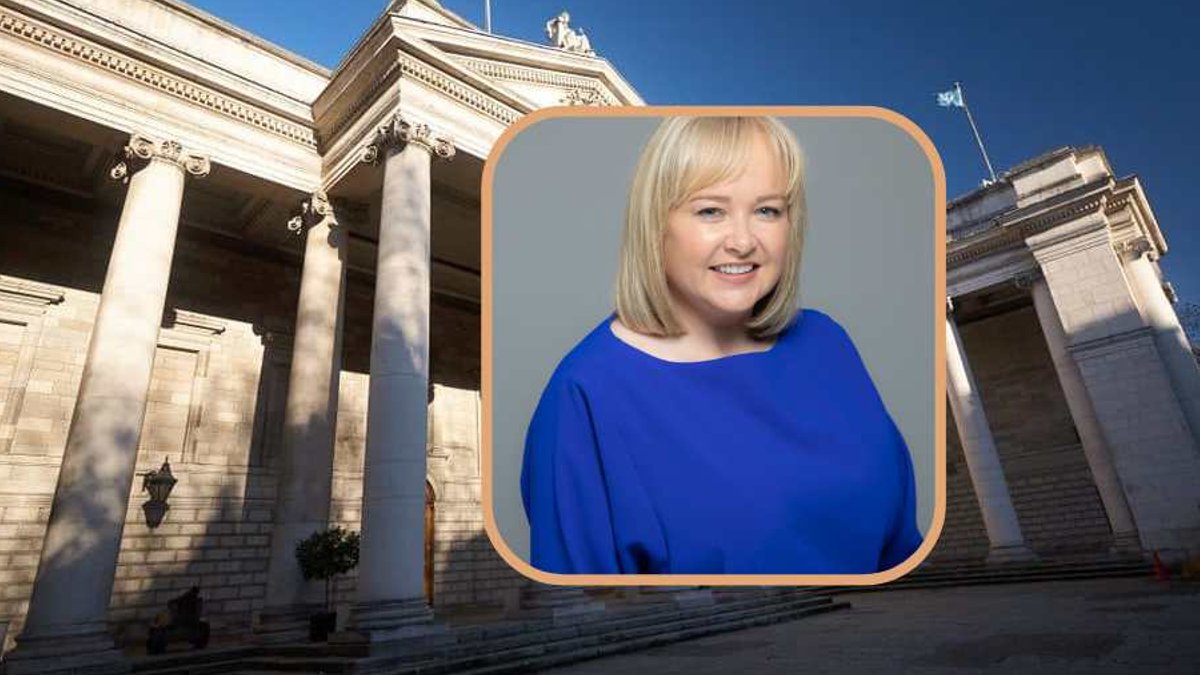
June Butler, head of Corporate and SME Banking at Bank of Ireland, insists that Irish businesses must tie sustainability directly to financial growth to endure both economic and environmental pressures. Speaking before her keynote at the Dargan Forum, a two-day event in Dun Laoghaire dedicated to climate action, technological adaptation, and economic resilience, she positions the issue as one of implementation rather than intent.
The forum, scheduled for June 24–25, gathers policymakers, corporate leaders, and specialists to examine how Ireland can reconcile sustainability with economic stability. Butler identifies a critical disconnect: while most businesses acknowledge sustainability’s importance, fewer than one-third of Irish SMEs have formalized plans. The problem, she states, stems not from a lack of awareness but from unclear action pathways. “The biggest barrier is not a lack of ambition – it’s that many businesses, especially SMEs, struggle to turn plans into action,” she says.
Most businesses understand why sustainability matters. But many don’t have a clear plan, and even when they do, they are unsure about the cost, the return, or where to start. Rising operating expenses and squeezed profit margins frequently sideline sustainability efforts, even when they could yield long-term savings. Her solution centers on simplifying the process.
Bank of Ireland has already taken steps to ease access to financing. Through its Green Business Loans, the bank assists SMEs in funding energy-efficient upgrades or renewable technology installations while reducing expenses. Yet funding alone proves insufficient. Butler emphasizes the need for practical support, such as the bank’s Sustainable Business Coach, which helps firms evaluate their current status and map out next steps. “A lot of SMEs don’t need more strategy – they need practical steps,” she states.
Related Post: UK Small Businesses Compare Card Reader Costs
Profitability as the green transition’s driving force
Linking sustainability to profitability is essential. When companies recognize that green investments can enhance efficiency, lower costs, and attract customers, sustainability transitions from an optional objective to a fundamental business strategy. The next challenge is expanding this mindset across Ireland’s economy, particularly in regions outside Dublin and Cork, where smaller enterprises and traditional industries face greater hurdles to adoption.
Butler’s perspective aligns with a broader redefinition of resilience. Traditionally, resilience has been framed as risk avoidance—shielding against supply chain disruptions or economic instability. However, the opportunity lies in positioning Ireland to capitalize on change rather than merely endure it. “We already have strong foundations, in digital capability, in our ability to attract investment, and in the strength of our SME base,” she says. Key to this are future-ready infrastructure, especially in digital and energy systems, and ensuring that regional development extends beyond urban centers. “If we want balanced, sustainable growth, businesses need the tools to succeed wherever they are based,” she adds.
Risk of a two-speed economy without support
The dual transitions to green and digital economies risk creating a divided market: those that adapt swiftly and those left behind. Smaller firms, rural businesses, and traditional sectors are most at risk, often constrained by higher costs, greater uncertainty, and limited capital access. Butler warns that without targeted assistance, this divide could widen.
Bank of Ireland’s role, according to Butler, involves three priorities: supplying the necessary capital, offering expertise to handle complex decisions, and preventing regional economies from being overlooked. Through initiatives like the SBCI Growth and Sustainability Loan Scheme, the bank supports SMEs in scaling sustainable projects while distributing the benefits of transition more evenly.
Related Post: Founders risk trapping businesses in their own expertise
From crisis management to growth leadership
Butler’s return to Bank of Ireland in 2024 follows a decade as CEO of the Strategic Banking Corporation of Ireland, where she led efforts to stabilize Ireland’s financial sector. Her current team of 200 professionals now serves over 3,000 businesses nationwide, bridging the divide between policy and practical application. Unlike her earlier role, which focused on systemic stability, her present leadership centers on empowering businesses to drive sustainable growth from the ground up. This shift reflects a broader acknowledgment within Irish banking that resilience now requires proactive investment, not just risk containment.
The SBCI Growth and Sustainability Loan Scheme, administered by Bank of Ireland, has disbursed €150 million since 2022 to help SMEs expand sustainable projects. Unlike broader green finance programs, this scheme includes a dedicated regional fund to guarantee equitable access for businesses outside Dublin and Cork. The bank’s relationship managers, who average 12 years of sector experience, play a key role in evaluating applications, often advocating for adjusted loan terms when a business’s cash flow projections deviate from standard risk assessments. This hands-on approach has boosted approval rates for first-time applicants by 18% compared to the bank’s general lending portfolio.
The emphasis on regional inclusion also extends to skills training. Bank of Ireland’s Sustainable Business Coach program now features a module on decarbonization strategies for small-scale food producers, a sector where energy consumption is often unmonitored. Distributed to 800 businesses, the guide led to a 25% rise in inquiries about sustainability loans from the sector.


Leave a Reply