
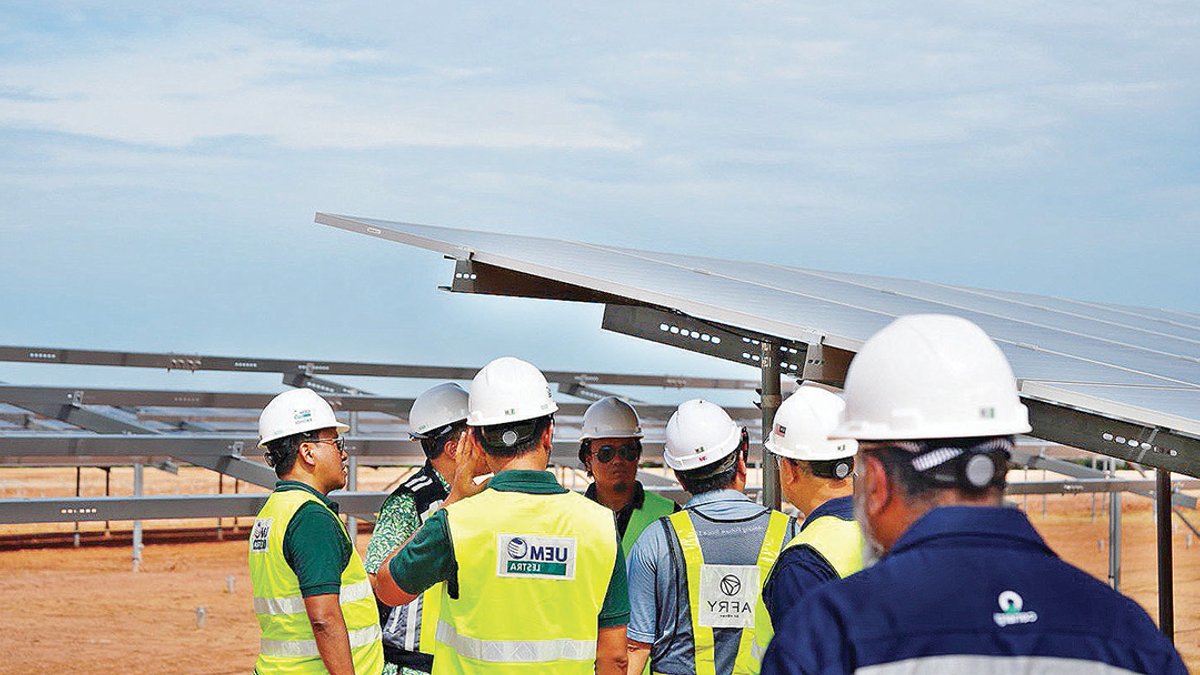
Malaysia Airports is advancing plans to reshape how its airports are powered, with a major solar project at Kuala Lumpur International Airport (KLIA) leading the way. The KLIA Aeropolis Solar Park, a collaboration with Cenergi SEA Bhd, will combine 36MWp of photovoltaic generation and 45MWh of battery storage on 102 acres of existing oil palm plantation in Sepang.
The facility, set to operate in 2027, will produce around 46,000MWh annually over 25 years. It’s one of Malaysia’s largest renewable energy projects built specifically for airport operations, and it won’t require additional forest clearance due to its location on existing plantation land.
Related: Satu Creative Launches Creative Sprint 2026 for Social Enterprises
To ensure reliable clean energy, Malaysia Airports and Cenergi SEA optimized every element, from site preparation to battery storage integration for grid stability. “Designing a solar park of this scale to integrate seamlessly with a fully operational international airport required careful engineering, meticulous planning and close coordination across multiple stakeholders. From site preparation on an existing plantation to the integration of battery storage for grid stability, every element has been optimised to deliver reliable clean energy for airport operations,” said Ir Kwok Yew Hoe, Group CEO of Cenergi SEA.
In addition to refreshed terminals, Malaysia Airports is investing in behind-the-scenes systems to keep operations running smoothly. The Aeropolis Solar Park aims to reduce KLIA’s dependence on conventional grid power, supporting Malaysia’s clean energy targets.
Related: Two ETFs to Consider Ahead of GTA 6
Beyond power generation, the Aeropolis Solar Park will house a Renewable Energy Centre of Excellence. This facility will bring together industry professionals, researchers, students, and government officials to share knowledge and develop skills for Malaysia’s energy transition.
“Reliable, lower-carbon energy is essential for operating major international airports,” said Dato’ Mohd Izani Ghani, Managing Director of Malaysia Airports. “The Aeropolis Solar Park reflects Malaysia Airports’ approach to strengthening energy resilience while advancing its commitment to a lower-carbon future. Through strategic partnerships and long-term investment, the organisation is building airports that are better prepared to support Malaysia’s aviation growth and sustainability ambitions.”


Leave a Reply